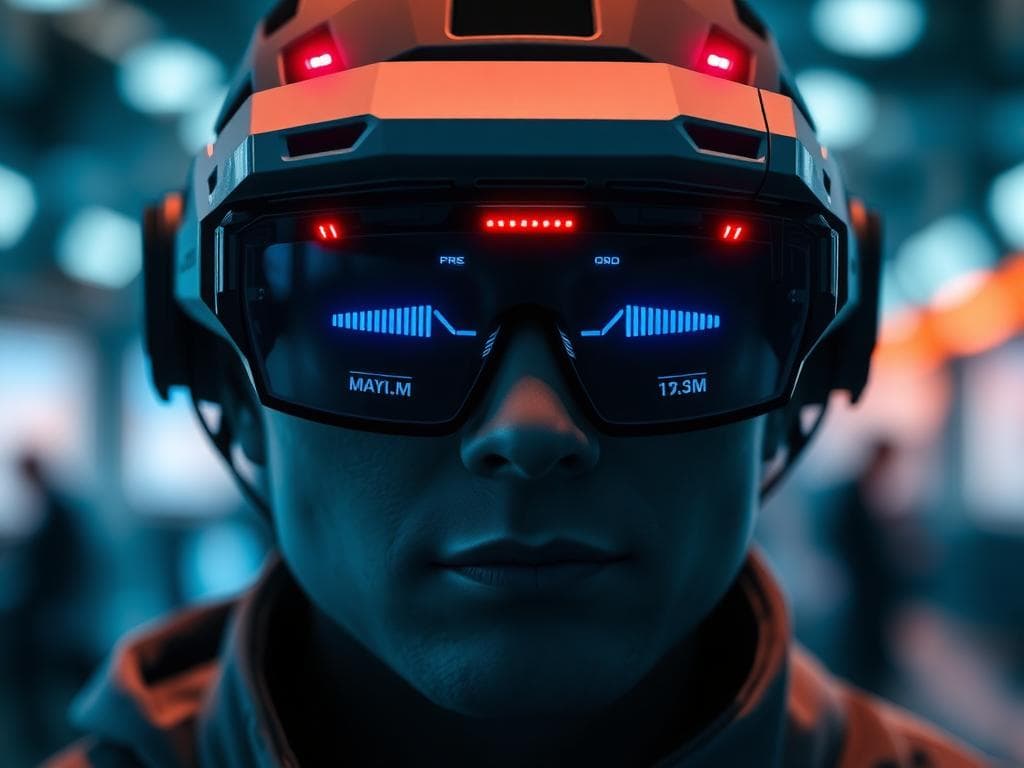
Meta's AI Glasses Expose Privacy Risks and Hidden Workforce
The Human Cost of AI: Behind Meta's Smart Glasses
In a Nairobi office complex, thousands of data annotators sit before screens, manually labeling images and videos. Their employer, Sama, is a subcontractor for Meta, training the AI systems that power the tech giant's Ray-Ban Meta smart glasses. Workers interviewed by Svenska Dagbladet and Göteborgs-Posten describe a disturbing reality: they routinely process videos showing bank details, sex acts, and people undressing or using the bathroom, seemingly unaware they are being recorded.
"We see everything—from living rooms to naked bodies," one anonymous worker stated. "Meta has that type of content in its databases. People can record themselves in the wrong way and not even know." This investigation exposes the hidden, often uncomfortable, human labor behind the AI revolution and raises urgent questions about privacy, consent, and corporate accountability.
From Viral Marketing to Intimate Surveillance
Meta markets its AI glasses, developed with EssilorLuxottica, as a revolutionary assistant. Ads feature hockey legend Peter Forsberg asking the glasses who Sweden's greatest player is. The pitch is an all-in-one tool for work, travel, and translation, promising user control. However, the reality for users—and the unseen annotators—diverges sharply from this controlled narrative.
When a user activates the AI with "Hey Meta," the glasses process voice, text, images, and sometimes video through Meta's servers. While Meta's terms state users can opt out of sharing data for product improvement, this processing for core AI functionality is mandatory and automatic. Network analysis by investigators confirmed frequent data transfers to Meta servers in Sweden and Denmark during use.
A Global Data Pipeline to Kenya
The investigation, based on over thirty interviews with Sama employees, reveals a pipeline of sensitive "live data" from glasses users flowing to annotators. Employees describe videos capturing private moments in Western homes, including "someone going to the toilet, or getting undressed." Another annotator recounted a scene where a man left his glasses on a nightstand, and his wife subsequently entered the room and changed clothes.
Despite Meta's claims of automated face-blurring, workers report the anonymization often fails, especially in poor lighting. Former Meta employees in the US, speaking anonymously, confirmed that while sensitive data isn't *intended* for training, user behavior makes leakage inevitable. "As soon as the device ends up in the hands of users, they do whatever they want with it," one said.
Regulatory Gray Zones and User Awareness
Meta's privacy policy states that interactions with its AI may be subject to "automated or manual (human) review" and that data is processed globally with partners. Data protection experts highlight a critical transparency gap. Kleanthi Sardeli, a lawyer at NOYB, argues explicit consent should be required for AI training. "Once the material has been fed into the models, the user in practice loses control," she says.
Petter Flink of Sweden's IMY authority notes users have "no idea what is happening behind the scenes." The value of the intimate behavioral data collected far exceeds that of the hardware itself, enabling hyper-targeted advertising. When SvD/GP visited ten Swedish opticians selling the glasses, staff gave contradictory and often incorrect assurances about data staying "locally in the app."
The Looming Threat of Facial Recognition
Privacy concerns are set to intensify. Multiple reports, including from The New York Times and TechCrunch, indicate Meta plans to add a "Name Tag" facial recognition feature to the glasses as early as 2026. This would allow wearers to identify strangers, fundamentally altering the device from a novelty to a potential surveillance tool.
This development has sparked warnings from privacy groups and calls for new legislation. EssilorLuxottica and Meta are also reportedly disputing pricing, which could impact the rollout. The feature represents a significant regulatory and consumer trust flashpoint, asking how much convenience users will trade for instant identification.
Grassroots Resistance and Legal Peril
In response, developer Yves Jeanrenaud created the "Nearby Glasses" Android app. It detects the unique Bluetooth signature of smart glasses and alerts users. "I consider it to be a tiny part of resistance against surveillance tech," Jeanrenaud told 404 Media. He notes that the glasses' recording indicator LED can be easily disabled, a fact demonstrated in YouTube tutorials.
Meta, in a statement to The Register, emphasized its LED light and user responsibility to comply with laws. However, legal risks are mounting. A California judge recently criticized Meta team members for wearing the glasses in court. Purdue Global Law School warns that features like facial recognition and audio recording could violate state wiretapping laws (requiring two-party consent in 11 US states) and various privacy statutes.
The investigation into Meta's AI glasses reveals a stark disconnect between marketed convenience and on-the-ground reality. It underscores the extensive, privacy-invasive human labor required to build AI and foreshadows a future where wearable tech could erode public anonymity. As one data annotator in Nairobi poignantly observed: "You think that if they knew about the extent of the data collection, no one would dare to use the glasses."
Related News

AI Image Generation in 2026: A Practical Guide to Models, Costs, and Agents

Block's Dessa: AI Voice Model Trained Only on Speech

NVIDIA OpenShell: A Secure Runtime for Autonomous AI Agent Fleets

WorldTUI: A 360M Model That Simulates a Terminal Without a Shell

Switch 2 Jailbroken: First Software Exploit Runs Homebrew and Mods
