ISS Astronauts Sheltered as Air Leak Worsens, Repairs Paused
Astronauts Shelter on ISS as Air Leak Prompts Precautionary Measures
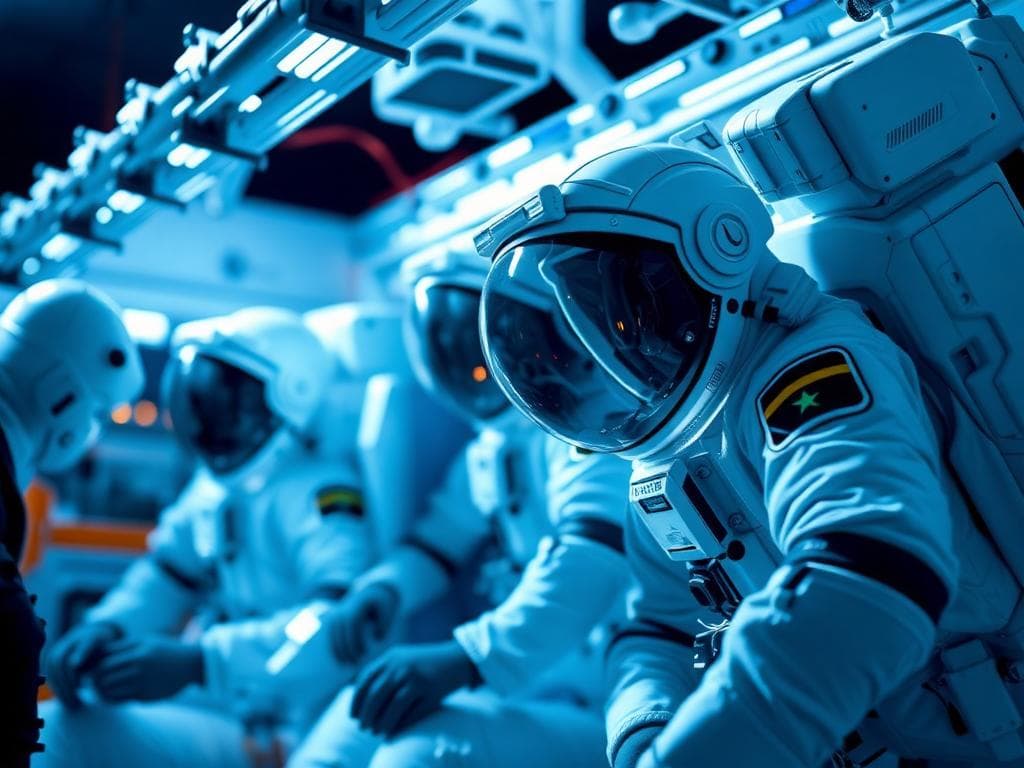
On Friday, June 5, 2026, NASA directed five of the seven astronauts aboard the International Space Station (ISS) to take refuge inside the docked SpaceX Crew Dragon "Freedom" spacecraft. The order was a precautionary response to an escalating air leak in the Russian segment of the orbital outpost. The crew members were instructed to don their spacesuits, putting them on standby for a potential emergency undocking and return to Earth.
The directive highlighted the spacecraft's critical role as a "lifeboat" for the station's crew. NASA spokeswoman Bethany Stevens stated the move was made "out of an abundance of caution" while Russian cosmonauts Sergey Kud-Sverchkov and Sergei Mikaev attempted urgent repairs on the leak within the Zvezda service module.
The Source of the Leak: A Persistent Structural Issue
The leak originated in the Zvezda service module's transfer tunnel, known as the PrK. According to NASA, this area "has suffered from cracks and leaks for some time," with the underlying issues persisting for approximately six years. The situation deteriorated earlier in the week, with the leak rate reportedly doubling from about one pound of air per day to two pounds.
This increase prompted Roscosmos to move beyond previous patchwork fixes and attempt a more extensive repair operation on June 5. The cosmonauts were reportedly using a saw to access the crack, a method with which NASA disagreed, according to one source. The agency and its Russian counterpart have been working to determine the root cause of the persistent cracks.
Emergency Protocols and a Split Crew
The shelter order created a split onboard scenario. The five astronauts directed to the Dragon capsule were the four members of SpaceX's Crew-12 mission—NASA astronauts Jessica Meir and Jack Hathaway, European Space Agency astronaut Sophie Adenot, and Roscosmos cosmonaut Andrey Fedyaev—along with NASA astronaut Chris Williams.
Meanwhile, Russian cosmonauts Kud-Sverchkov and Mikaev remained in the Russian segment to conduct the repairs. Their designated escape vehicle was the separately docked Soyuz MS-28 spacecraft. This arrangement is standard procedure; crew members are pre-assigned to specific return vehicles before launch.
- Crew Dragon "Freedom": Would return Crew-12 astronauts Meir, Hathaway, Adenot, and Fedyaev for a splashdown off the U.S. coast.
- Soyuz MS-28: Would carry cosmonauts Kud-Sverchkov and Mikaev, along with NASA's Chris Williams (who launched with them), for a landing on the Kazakh steppe.
This protocol ensures an organized evacuation, but it also means astronauts would not simply leave in the vehicle they were sheltering in during an emergency.
Repairs Paused, Crew Returns to Normal Operations
The heightened state of alert was relatively brief. Approximately 90 minutes after the shelter order was issued, Roscosmos paused its repair efforts. Following this development, NASA instructed the crew inside the Dragon spacecraft to "end the safe haven procedures and return to planned operations aboard the International Space Station."
Russian news agency Tass, citing Roscosmos, reported that nothing had threatened the safety of the crew or the ISS's onboard systems. The situation underscores the complex, collaborative nature of ISS operations, where safety protocols are triggered proactively, even for known and managed issues.
Why This Incident Matters for Space Station Operations
This event is not an isolated anomaly but part of a long-standing challenge for the aging space station. The Zvezda module, which provides life support and living quarters for the Russian segment, was launched in 2000. Persistent micro-cracks and leaks are an ongoing engineering concern for a structure subjected to extreme thermal cycles and micrometeoroid impacts over decades.
The incident demonstrates the robust, layered safety architecture of the ISS. The ready availability of multiple docked spacecraft—both Dragon and Soyuz—provides redundant lifeboat capabilities, a non-negotiable requirement for continuous human habitation in low-Earth orbit.
Furthermore, it highlights the intricate international cooperation required to manage the station. Decisions involve constant coordination between NASA's mission control in Houston and Roscosmos's control center, even when there are disagreements on methodology, as hinted at in the reports about the repair technique.
As the ISS enters its third decade of operation, such incidents are expected to become more frequent, testing the durability of its components and the responsiveness of its ground teams. The swift implementation and subsequent stand-down of shelter procedures show that the system, while stressed, is functioning as designed to prioritize crew safety above all else.
Related News

AI Image Generation in 2026: A Practical Guide to Models, Costs, and Agents

Block's Dessa: AI Voice Model Trained Only on Speech

NVIDIA OpenShell: A Secure Runtime for Autonomous AI Agent Fleets

WorldTUI: A 360M Model That Simulates a Terminal Without a Shell

Switch 2 Jailbroken: First Software Exploit Runs Homebrew and Mods
