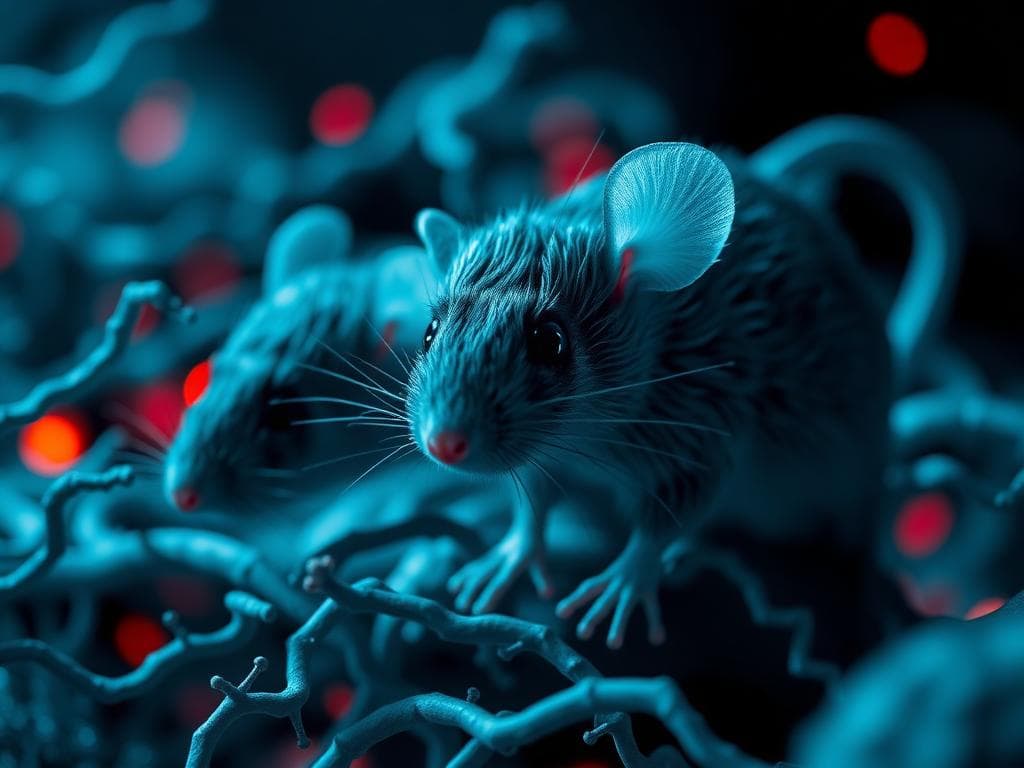
Gut Bacteria Drive Memory Loss in Aging Mice, Reversible via Nerve Stimulation
The Gut-Brain Highway and the Aging Mind
New research from Stanford Medicine and the Arc Institute has identified a specific, three-step biological pathway through which changes in gut bacteria directly contribute to age-related memory loss in mice. The groundbreaking study, published in Nature on March 11, 2026, demonstrates that this cognitive decline is not an inevitable, "hardwired" process of the brain but is actively modulated by signals from the gastrointestinal tract.
Strikingly, the research team found they could completely reverse memory deficits in aged mice by stimulating a key communication pathway. "The degree of reversibility of age-related cognitive decline... just by altering gut-brain communication was a surprise," said senior author Christoph Thaiss, Ph.D., assistant professor of pathology at Stanford.
"We tend to think of memory decline as a brain-intrinsic process. But this study indicates that we can enhance memory formation and brain activity by changing the composition of the gastrointestinal tract—a kind of remote control for the brain." The findings open a promising new avenue for combating cognitive aging in humans.
From Shared Cages to Cognitive Clues
The investigation began by co-housing young (2-month-old) mice with old (18-month-old) mice. This forced sharing of microbes through coprophagia (eating feces) caused the gut microbiomes of the young mice to rapidly resemble those of the old animals. Subsequently, these young mice with "aged" microbiomes began performing poorly on memory and navigation tests, mirroring their older cage-mates.
In object recognition tests—akin to human tests of visual memory—and maze escape tasks, these young mice showed significant cognitive decline. Conversely, old mice raised from birth in a germ-free environment, lacking any gut microbiome, performed as well as young mice, suggesting their cognitive function was preserved.
This was a crucial clue: the aging microbiome itself, not merely chronological age, was driving the problem. Transplanting gut microbes from old mice into young, germ-free mice was sufficient to induce cognitive deficits. Furthermore, treating young mice with "aged" microbiomes using broad-spectrum antibiotics restored their cognitive abilities.
Unpacking the Three-Step Pathway to Forgetfulness
The researchers meticulously mapped the cascade of events linking gut changes to brain fog. First, they identified a specific bacterial culprit: Parabacteroides goldsteinii. The relative abundance of this bacterium increases with age in mice and directly correlates with poor cognitive performance.
Colonizing young mice with P. goldsteinii alone was enough to inhibit their performance and reduce activity in the hippocampus, the brain's memory center. The second step involves metabolites. The rise of P. goldsteinii leads to increased levels of medium-chain fatty acids.
These metabolites trigger the third step: an inflammatory response from a group of immune cells in the gut called myeloid cells. This inflammation, in turn, impairs the function of the vagus nerve—the major information superhighway carrying signals from the gut to the brain.
The Vagus Nerve as a Reversible Switch
The impaired vagal signaling results in reduced activity in the hippocampus. The researchers demonstrated that this broken communication line is the direct driver of memory decline. Most importantly, they proved it is reversible.
By treating old mice with a molecule that activates the vagus nerve (specifically a TRPV1 agonist like capsaicin, the compound that makes chili peppers hot), they restored the animals' cognitive performance to levels indistinguishable from young mice. The same treatment overcame the detrimental effects of P. goldsteinii colonization.
"Basically, we’ve identified a three-step pathway toward cognitive decline," Thaiss summarized. "And if we restore the activity of the vagus nerve, we can restore an old animal’s memory function to that of a young animal."
Implications for Human Health and Future Therapies
The study's implications are profound. While conducted in mice, the gut-brain axis is a highly conserved system in mammals, including humans. As noted in a Nature News article covering the study, the identified circuit "is likely conserved in humans." This research provides a plausible biological mechanism for the variability in age-related cognitive decline observed in people.
"Since the gastrointestinal tract is easily accessible orally, modulating the abundance of gut microbiome metabolites is a very appealing strategy to control brain function," said co-senior author Maayan Levy, Ph.D., assistant professor of pathology.
The team is now actively investigating whether an identical pathway exists in humans. Therapeutically, vagus nerve stimulation (VNS) is already FDA-approved for conditions like epilepsy and depression, offering a potential near-term pathway for clinical translation.
Future strategies could include dietary interventions, prebiotics or probiotics targeting P. goldsteinii, or drugs that mimic the effects of vagus nerve stimulation. This research fundamentally reframes age-related memory loss from a purely neurological fate to a systemic condition influenced by gut health, offering new hope for interventions that could help maintain cognitive vitality with age.
Related News

AI's Economic Payoff Still Confined to Tech Sector, Data Shows

AI Image Generation in 2026: A Practical Guide to Models, Costs, and Agents

Block's Dessa: AI Voice Model Trained Only on Speech

NVIDIA OpenShell: A Secure Runtime for Autonomous AI Agent Fleets

WorldTUI: A 360M Model That Simulates a Terminal Without a Shell