El Paso Airport Shutdown: Drone Threat or Tech Test Debacle?
Chaos Over El Paso as Conflicting Stories Emerge Over Airport Shutdown
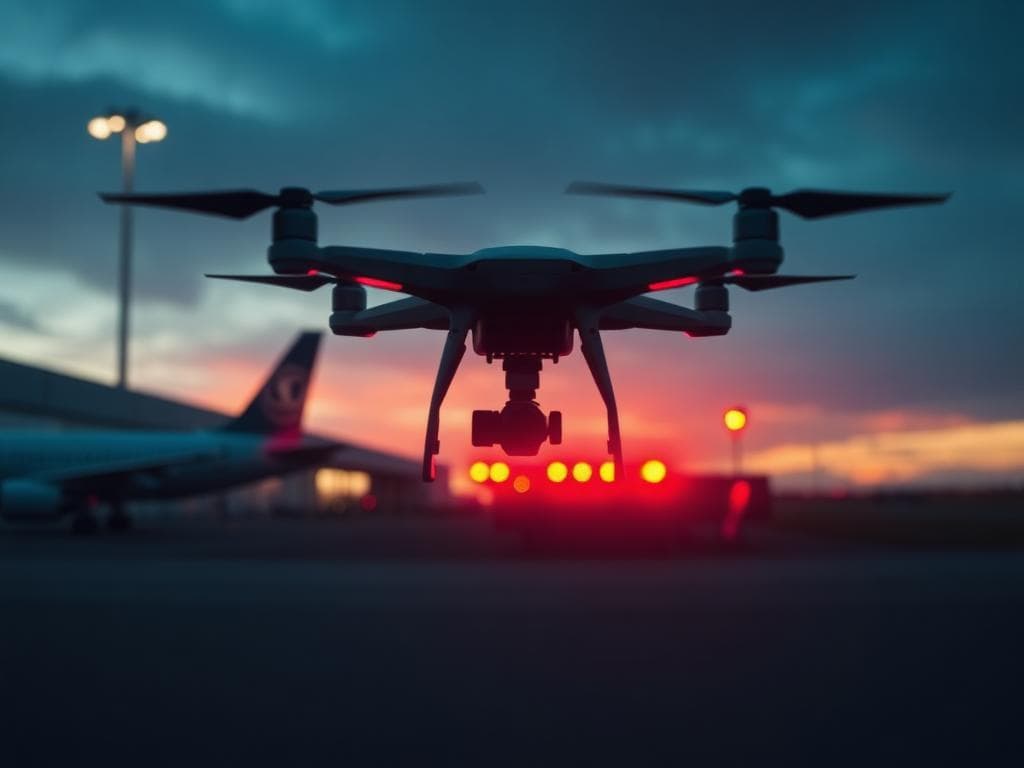
Late Tuesday night, the Federal Aviation Administration issued a sudden and sweeping order: all flights to and from El Paso International Airport were grounded for ten days. The notice, citing "special security reasons," plunged a major metropolitan area into confusion, diverting medical flights and stranding travelers. By Wednesday morning, the order was rescinded, but the official explanation—a Mexican cartel drone incursion—was immediately challenged by lawmakers and other sources, pointing to a botched test of new military counter-drone technology.
The initial FAA notice took local officials completely by surprise. El Paso Mayor Renard Johnson stated that the city, airport, hospitals, and community leadership received no advance coordination. "This unnecessary decision has caused chaos and confusion," Johnson said. "You cannot restrict air space over a major city without coordinating... That failure to communicate is unacceptable." The shutdown forced medical evacuation flights to divert to Las Cruces, New Mexico, 45 miles away.
Official Narrative: A Cartel Drone Incursion
In the hours following the reopening, Trump administration officials presented a unified front. Transportation Secretary Sean Duffy, along with White House and Pentagon representatives, stated that Mexican cartel drones had breached U.S. airspace. Duffy announced on social media that the military had "neutralized" the threat and that there was "no danger to commercial travel." This narrative aligned with longstanding administration warnings about cartels using drones for surveillance and drug smuggling near the border.
Steven Willoughby, deputy director of the Department of Homeland Security's counter-drone program, had testified to Congress in July 2024 about the scale of the issue. He reported that 27,000 drones had flown within approximately 1,650 feet (500 meters) of the border over a six-month period, many operated by "organizations hostile to law enforcement." The administration has consistently framed drone incursions as a significant border security threat.
The Counter-Narrative: A Rushed Military Tech Test
However, multiple sources briefed on the events provided a starkly different account to The New York Times and CBS News. According to these officials, the shutdown was triggered not by an external threat, but by the U.S. military's own actions. The Defense Department, operating from the nearby Fort Bliss Army base, began testing new counter-drone technology—reportedly involving a high-energy laser system.
Critically, the military proceeded with this test despite not providing the FAA sufficient time to conduct a mandatory safety risk assessment. FAA officials had reportedly warned the Pentagon they needed 24 hours to evaluate the risks the new technology could pose to other aircraft. When the military moved forward anyway, the FAA, fearing for aviation safety, felt compelled to shut down the surrounding airspace as a precaution.
Political and Diplomatic Fallout
The conflicting explanations sparked immediate pushback from elected officials. Representative Veronica Escobar (D-Texas), whose district includes El Paso, flatly rejected the drone incursion story. "There was not a threat, which is why the FAA lifted this restriction so quickly," she stated. "The information coming from the administration does not add up." She noted that drone incursions from Mexico are not unusual and questioned why this specific event would warrant such an extreme, ten-day response.
The incident also created a diplomatic rift. Mexican President Claudia Sheinbaum directly contradicted the U.S. administration's claims, stating, "There is no information about the use of drones at the border." She pledged her government would investigate the causes of the U.S. airspace closure, despite Mexican airspace remaining open. This public disagreement highlights the sensitive nature of cross-border security coordination.
Broader Context: The Rising Drone Threat and Countermeasures
The incident underscores the complex challenge drones pose to national airspace security. Cartels have increasingly adopted drone technology for logistics, surveillance, and even offensive operations within Mexico. The U.S. government's counter-drone program is a critical, yet sensitive, response. These systems—which can include jamming, spoofing, or kinetic measures like lasers—themselves risk interfering with legitimate aviation if not meticulously coordinated with the FAA.
The ten-day initial closure window was a major red flag for aviation experts. Such a lengthy, unplanned shutdown is extraordinarily rare and disruptive. Even during high-risk international events, FAA closures are typically measured in hours, not days. This extreme measure suggests the FAA's initial safety concerns about the military's technology were severe, or that the lack of coordination was so profound they opted for an overly cautious blanket restriction.
Unanswered Questions and Lasting Implications
Key questions remain unresolved. Was a cartel drone even present, or was the military responding to a false signal or a mistaken target? One report from HuffPost and Gizmodo suggested the initial catalyst may have been the military shooting down a "party balloon" mistaken for a drone earlier in the week. The exact nature of the "new counter-drone technology" tested at Fort Bliss is also unclear.
The debacle exposes significant flaws in interagency coordination between the Department of Defense and the FAA regarding the deployment of advanced airspace security tools. For the aviation industry and the flying public, the event is a stark reminder that conflicts between military operational security and civilian aviation safety protocols can have immediate, tangible consequences—grounding flights, disrupting medical evacuations, and sowing public confusion.
Ultimately, the El Paso shutdown is more than a one-day news story. It is a case study in the growing pains of integrating disruptive defensive technologies into the world's most complex national airspace system, and a warning about the consequences when communication between agencies breaks down.
Related News

AI's Economic Payoff Still Confined to Tech Sector, Data Shows

AI Image Generation in 2026: A Practical Guide to Models, Costs, and Agents

Block's Dessa: AI Voice Model Trained Only on Speech

NVIDIA OpenShell: A Secure Runtime for Autonomous AI Agent Fleets

WorldTUI: A 360M Model That Simulates a Terminal Without a Shell