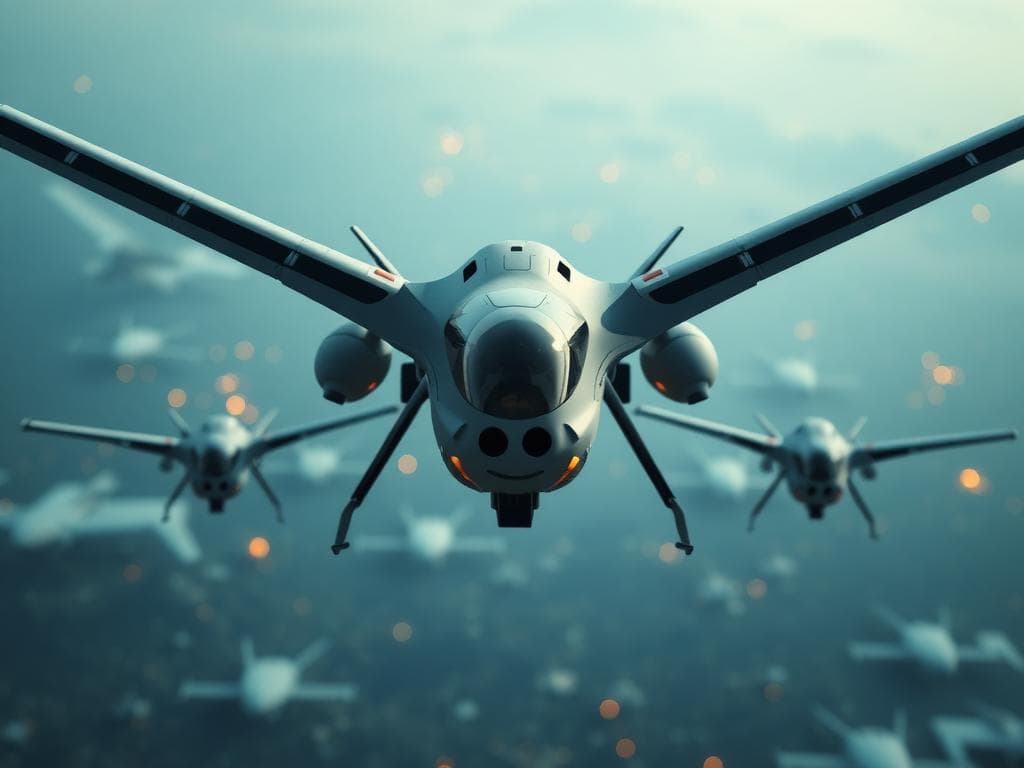
Airbus Teams with Kratos to Fly European Valkyrie Combat Drones in 2026
Europe's Collaborative Combat Aircraft Ambition Takes Flight
Airbus Defence and Space is accelerating its push into next-generation air combat, announcing preparations for the first European flight of two modified Kratos XQ-58A Valkyrie uncrewed aircraft later this year. The move is a cornerstone of a strategic partnership with U.S. firm Kratos Defense & Security Solutions, aimed at delivering an operational Uncrewed Collaborative Combat Aircraft (UCCA) system to the German Air Force by 2029.
Work is underway at Airbus's site in Manching, Germany, where the two Valkyrie airframes acquired from Kratos are being integrated with Airbus's sovereign Multiplatform Autonomous Reconfigurable and Secure (MARS) mission system. This European-developed system is critical to the program's political and strategic viability, ensuring operational autonomy from non-European technology.
The Sovereign 'Brain': Airbus's MARS Mission System
At the heart of this effort is the MARS mission system, which Airbus touts as a complete replacement for a human pilot. A key component is MindShare, an AI-supported software "brain." Its distributed architecture allows it to coordinate not just a single drone, but entire groups of manned and uncrewed platforms during a mission.
"By combining the Kratos Valkyrie with our MARS mission system, we are offering the German customer exactly what Germany and Europe urgently need," said Marco Gumbrecht, Head of Key Account Germany at Airbus Defence and Space. He emphasized the program's goals of delivering "credible combat capability in time of relevance" at an affordable price, a factor repeatedly cited as essential for achieving the "affordable mass" required in modern peer-conflict scenarios.
Technical Specs and Operational Role
The Valkyrie brings proven performance to the table. The drone measures 9.1 meters in length with an 8.2-meter wingspan and boasts a significant range of over 5,000 kilometers. It has a maximum take-off weight of approximately three tons and a service ceiling of up to 45,000 feet. Since its first flight in the U.S. in 2019, the platform has undergone extensive testing.
In the envisioned Manned-Unmanned Teaming (MUM-T) concept, the Valkyrie would operate either fully autonomously or under the command of a crewed aircraft like the Eurofighter Typhoon. It is designed to undertake high-risk missions, thereby reducing danger to human pilots. Airbus and Kratos are initially focusing on a specific, undisclosed combat role for the German customer to demonstrate timely and targeted capability delivery.
Enabling the Manned Commander: Eurofighter Upgrades
To realize this teaming vision, Airbus is also upgrading the Eurofighter's capabilities. In collaboration with Rafael, the company is enhancing the Litening 5 Advanced Targeting Pod (already on order for the German fleet) with a new connectivity function. Coupled with minor avionics updates, this will transform the Eurofighter into a more effective "command aircraft," directly controlling drone wingmen and significantly boosting overall mission lethality.
A Competitive European Landscape
This announcement comes amidst a flurry of European activity in the collaborative combat space, highlighting the continent's urgent drive to modernize its air power. On March 12, 2026, Leonardo's CEO Roberto Cingolani revealed plans for a secretive first demonstration, dubbed "Case War," in April-May 2026. This will involve an M-346 light-attack aircraft commanding two uncrewed fighters developed with Turkish firm Baykar.
These parallel developments underscore a strategic shift across NATO and European allies. The focus is moving beyond standalone fighter jets toward networked, mixed fleets of crewed and uncrewed systems. The goal is to increase mass, complexity for adversaries, and operational flexibility while managing costs.
The Strategic Imperative: Affordable Mass and Sovereignty
Steve Fendley, President of Kratos Unmanned Systems Division, framed the partnership's value proposition clearly. "We are realizing an optimal capability system that can be bought and deployed as 'affordable mass'; the consistent discriminator identified in today’s peer to peer wargames," he stated. This directly addresses lessons learned from recent conflicts, where expendable, attritable drones are playing increasingly decisive roles.
The Airbus-Kratos model offers a potentially faster track to capability by leveraging an existing, flight-proven airframe (the Valkyrie) and mating it with a new, sovereign mission system (MARS). This contrasts with programs aiming to develop both platforms entirely from scratch, which carry higher cost, schedule, and technical risk.
Conclusion: A Pivotal Year for European UCCA
The planned 2026 flight of the Europeanized Valkyrie represents a major milestone. It is a tangible step toward closing the capability gap with other global powers actively developing similar technologies. For Germany and Europe, the success of this Airbus-led program is not merely about acquiring new hardware; it is about securing a sovereign path to next-generation air combat power, ensuring strategic autonomy, and validating a new model of transatlantic industrial cooperation in a critical defense domain.
Related News

AI's Economic Payoff Still Confined to Tech Sector, Data Shows

AI Image Generation in 2026: A Practical Guide to Models, Costs, and Agents

Block's Dessa: AI Voice Model Trained Only on Speech

NVIDIA OpenShell: A Secure Runtime for Autonomous AI Agent Fleets

WorldTUI: A 360M Model That Simulates a Terminal Without a Shell